It took me a year and a half to finish this piece of writing because it’s not a straightforward topic and my capacity to gather objective evidence is limited. Although I have to admit it is tempting to make overgeneralised or oversimplified statements, I’m only writing now what I believe is right from my experience with the PhD application process and has been confirmed during my PhD studies up to now (I’m currently in my 19th month). I want to make it clear that my reporting takes the form of a case study, which by all measures cannot be generalised to the population. It has been a natural experiment in its own right, and so it is expected that other experiments under different conditions might produce different or even contrasting results. I urge you to bear in mind such expectations and invite you to apply your own standards when reading my writing.
Okay, now that you know very well what your motivations are and how to manifest them in your application, let’s look at how to convince the board you’re not only strongly motivated, but also have what it takes to complete a PhD.
If you’re applying for an advertised PhD studentship, you’ll have a job description (JD) to refer to. Even if you aim for other PhD routes which might not have an official JD, search for similar programmes and look at their JDs. Usually you will see an Entry Requirements section where they tell you what you need to be able to be considered for admission. From my experience submitting more than 15 applications, most universities in the UK look for a candidate with the following criteria, which I will divide into hard components and soft components:
Hard components include:
- A masters degree (or equivalent qualifications/experience), preferably with Distinction
- Research experience (either through work, dissertations, or publications)
- English language certificate (or equivalent) if you’re not coming from an English-speaking country
Soft components include:
- A well developed research proposal
- Two references (2 academic references, or 1 academic reference and 1 professional reference)
- A personal statement
Now I know that’s quite a few boxes to tick, and this is also where I see a lot of people started to lose confidence in their applications, because they might have only a masters with merit, or not so much (or at all) research experience, or their IELTS scores might not be so impressive, etc. And I tell you from my own experience, while all of those criteria are important, some are weighted more than the others, and some will play the central role in your application. I will explain this in detail below.
Hard components
Qualifications
First of all, to embark on a PhD program, unless you’re an exceptional undergrad student, you usually will need a master’s degree. If you’re aiming for top universities, it is sadly true that they might not even look at your application if you don’t have a distinction grade coming out from top tier university. Apparently I have received some of these “desk rejections” from top universities in the UK. But if you only have a 2:1 master’s degree from an average university like me, there are still opportunities for you, based on these following grounds.
Firstly, you don’t have to be academically excellent to complete a PhD. In my experience, and from observing a lot of PhD candidates around me, you can be an average achiever and still get on pretty well with your PhD studies. The reason might be because of the nature of a PhD programme as compared to a master’s or a undergrad programme. A PhD programme is unstructured, and you’re expected to generate new knowledge; so the way that you “study” and are assessed is going to be totally different from the lower degrees.
Secondly, the pyramid structure of the education system grants that even if you’re not doing quite well in lower degrees, you might still be successful with a PhD. When you’re in school, you’re given as much broader knowledge (base) as possible, but when you start to climb higher, the focus of the undergrad and postgrad programs gets smaller and smaller so that you will have only one or two majors. With a PhD you’re basically at the top of the pyramid. Therefore, if you’re excellent at certain subjects in university but not so much at others, it means your GPA will not be impressively high, but you can still do a good PhD in the areas that you’re really good at.
So the key here is to stay focused and understand what undertaking a PhD entails. Demonstrate to the admission boards that you’ve performed consistently well where it matters through your cover letter or in the interviews. If your transcripts really have nothing to brag about (e.g. you’re diverting from your university major, or you really don’t know what the hell you’ve been doing during your undergrad), surely you must have found your interest in the subject through your job or some vocational courses. Make a point about that, and make sure you have a track record of your interest and performance where relevant. At the same time, show them you have done your homework and understand, not exactly but at least to a certain extent what a PhD means, how it is going to play out in terms of timeline, and what results you are expected to produce. Most importantly, do not let the desk rejections get to your head and keep on looking for a suitable place that will accept you.
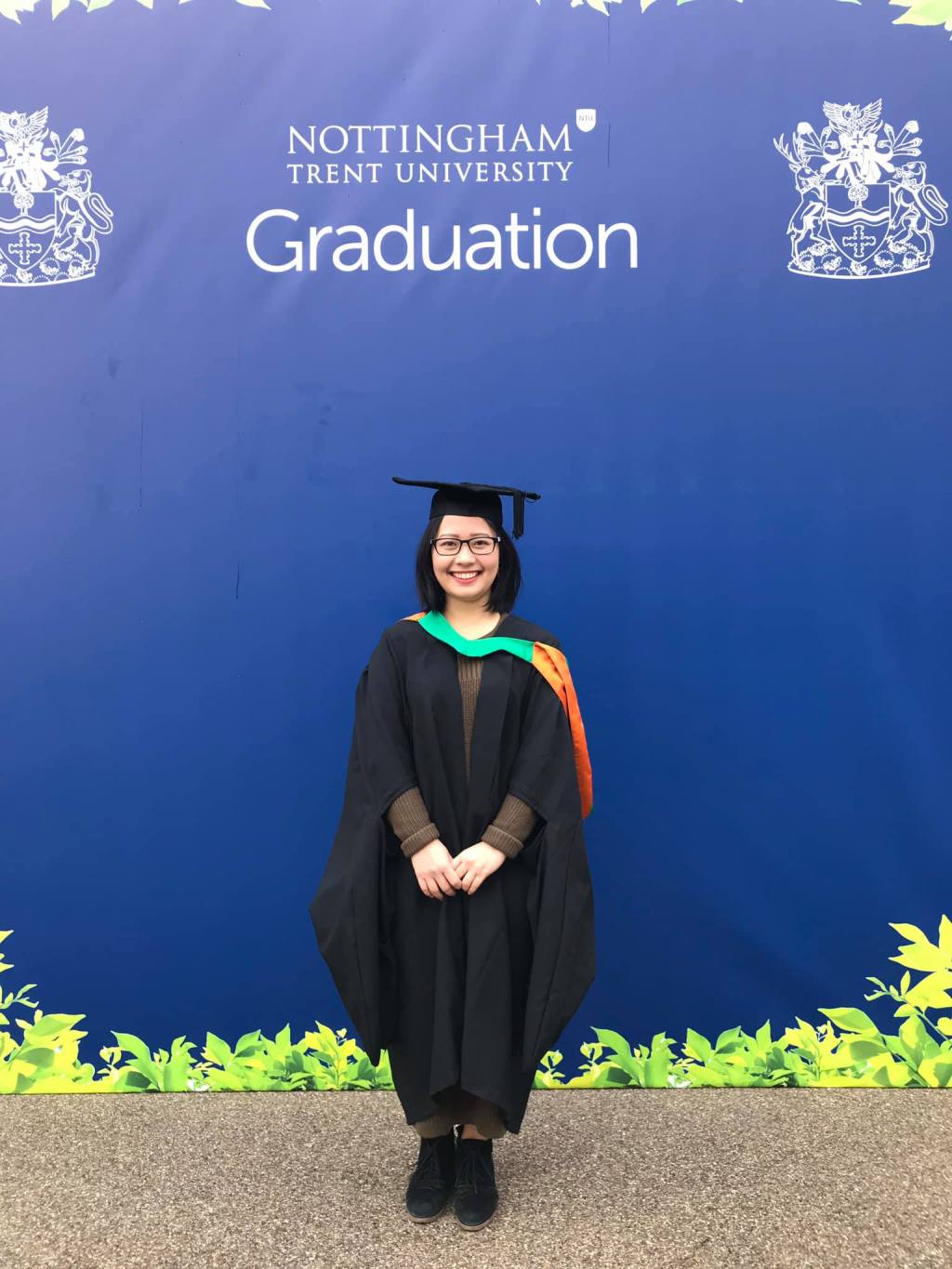
In my case, I’ve got my master’s degree from Nottingham Trent University, a mid-ranking uni, and I only graduated with Commendation (Merit – a final grade of 60-69%). However, I did get a High Distinction for one of the modules that set the foundation for my PhD research, and I highlighted it several times in my application. My first degree was in Vietnam. What I studied for my first degree was totally irrelevant to my master’s and my PhD, but it built the cultural understanding and subject knowledge that are of essence to my PhD studies.
Research experience
Regarding research experience, again you don’t need to freak out if you don’t have any. This is also a nice-to-have and not a must-have thing in social sciences and specifically, in business and management. I’m aware that for other disciplines, for example, health and medicine, or design and engineering, publications and research experience may be an important measurement of your competency for a PhD program. However, in business and management, theory and practice always go hand in hand, so sometimes your practical experience may be as valuable as research experience. Myself and many of my cohort do not have publications or research experience prior to their PhD applications. Of course you need to demonstrate that you have the potential to conduct a research project at doctoral level, but if you have written thesis for your undergrad or postgraduate studies, it should suffice to indicate that you can start your doctoral studies. This is because whether you have prior research experience or not, you will still be provided with lots of research training during your PhD program and there will be plenty of time for you to catch up with your skill gaps.
In my case, I have no prior research experience. I didn’t even write a dissertation for my master’s degree because back then I chose to do an internship. My bachelor’s dissertation used secondary data whose quality could be quite questionable. However, I did develop advanced writing and editing skills while working for a publishing company; and as you’ll learn most of conducting research is about writing, so these skills are valuable and I made sure to emphasise it in my application.
Language proficiency
Regarding English efficiency, high IELTS score is always good, but it is just an indicator of your ability to use English effectively. Your actual English skills will be demonstrated in your research proposal, your application, and most importantly, your interviews. So my general advice will be to get a decent IELTS score, but do not get obsessed with it. Language is just a tool, the content of your work is what matters. Therefore, invest your time in reading your subject materials, listening to podcasts or workshops on the topic that you are interested in, and try to immerse yourself in the scholarly world as much as possible to improve the substance of your work. The goal here is to be able to present yourself and your ideas coherently and persuasively, which includes describing, explaining, and criticising others’ and your own work.
In my case, I got an 8.0 IELTS band score, with only 7.0 for both speaking and writing. Yet because I have been working with English materials in my job, I was somewhat comfortable reading academic journals and books. Most importantly, I could engage in a discussion in English and did not feel like I was being held back because I couldn’t get my thoughts out in words.
Because the post has already gotten quite long, I will continue to dissect and reflect on my application in Part 2—the soft components, which are the epicentre of any PhD application.


 tracemyPhD
Leave a reply to How a non-academic get a funded PhD offer – Your application (Part 2) – tracemyPhD Cancel reply