
This year marks the 60th anniversary of Brunel University of London. Compared with Oxford, the oldest university in the UK, with a history stretching back more than 800 years, Brunel is basically a primary-school kid.
What does Brunel mean?
When Vietnamese people hear “Brunel”, they often think of the country of Brunei. In fact, Brunel is a French surname. The university was named after Isambard Kingdom Brunel, one of Britain’s greatest civil engineers of the nineteenth century, who designed and built some of the most technologically advanced engineering projects of his time. The most famous example is probably the Great Western Railway, the legendary railway network that played an important role in Britain’s Industrial Revolution. In 2002, when the BBC ran a nationwide poll to find the greatest Briton in history, Brunel came second, behind Winston Churchill and ahead of illustrious figures such as Shakespeare, Darwin and Newton.
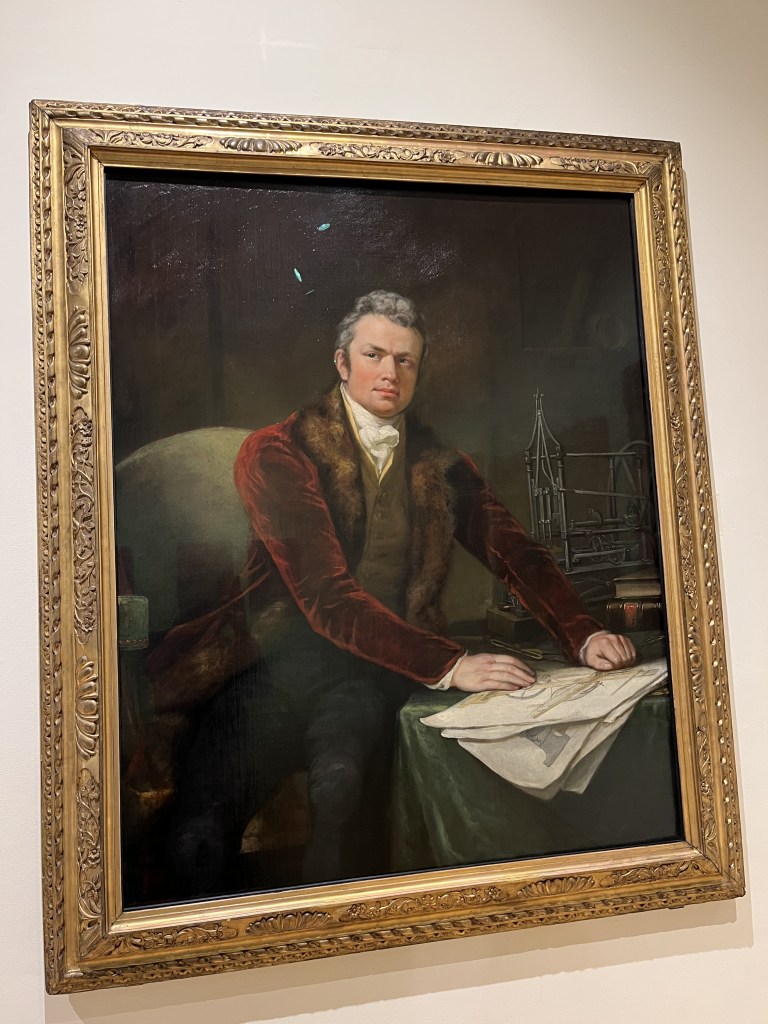
Brunel was the second generation of an immigrant family. His father, Marc Isambard Brunel, was a refugee who fled the upheaval of the French Revolution in 1789. Modern-day Brunel is also one of the most internationalised universities in the UK, with a very high degree of cultural and national diversity.
From my own experience as a student, a teacher and someone who has also done administrative work at the university — including one particular experience of challenging harassment based on gender and race that affected me personally — I have found that this diversity manifests itself in an environment where clashes based on skin colour or ethnicity are relatively uncommon, and where allegations relating to these issues are taken very seriously and dealt with decisively. I used to take this for granted. It was only when incidents involving gender and racial discrimination at some major universities were brought to light recently that I began to understand just how important a university’s “level of internationalisation” can be to the experience of an international student.
Brunel in Uxbridge
Brunel is located in Uxbridge, in the western suburbs of London, a place best known for the Battle of Britain Bunker, the underground command centre that served as the strategic nerve centre for the air-defence campaign protecting London and the south-east of England from Nazi German bombing in 1940.
I usually explain to people back home that, geographically speaking, Uxbridge is to London roughly what Ba Vì is to Hanoi. It may be a suburb, but Uxbridge has a fairly lively local life, plenty of students and all the essential services you could need.
The last time Uxbridge really made it onto the national television news was during the by-election in July 2023, when voters were choosing a new MP to replace one of Britain’s most scandal-plagued former prime ministers, Boris Johnson, after he resigned. I wasn’t particularly interested in politics back then, but Brunel was also where some very heated political debates between the candidates took place — including one featuring the world-famous Count Binface.
Since then, I don’t think Uxbridge has made the national news at all.
Free food, music and dances
When I was living close to the university, the thing I cared about most apart from studying was student social life.
Back then, the Department of Social and Political Sciences — a department I had absolutely nothing to do with — held a pizza lunch for its students and staff every Tuesday. A few of us from the Business School would literally set our alarms for noon, head down to the Social Sciences common room, not only to eat free pizza but also, shamelessly, to carry a whole pile of it back to our offices for afternoon snacks and dinner.
Basically, wherever there was free food on campus, we were there. We would then sit around eating it while complaining about how bad it was.
I also signed up for the Students’ Union’s free yoga classes three times a week. The teacher was brilliant, the classes were fun and friendly, and we have somehow kept in touch all the way to the present day.
The university’s Arts department regularly organised free concerts, giving its students a stage on which to perform. I would wander over to listen to music and watch theatre, partly to broaden my horizons. The most fun was during the summer of my first year, when I signed up to learn Kathak, a traditional Indian classical dance. After several classes, I still had absolutely no idea how to count the rhythm, and my arms and legs were still going in completely different directions, but it was enough to make me fall in love with the classical music of India.
During the more than a year I spent living near the university, these extracurricular activities made my life much richer and helped me cope with the pressure of studying.
The serious stuff
Now, back to the academic and research side of things.
Brunel positions itself as a research-focused university. Things may be different in other departments, but in my Business School, the pressure to publish and constantly produce research outputs can make the atmosphere feel permanently stretched to breaking point.
Brunel is very open to bringing in talented academics from overseas, but it is equally willing to filter people out when they fail to meet expectations. If you fit the environment, you might describe it as “competitive”. If you don’t, it can sometimes feel a bit brutal.
So, what about me?
I came to Brunel because of what I can only describe as fate.
When I was applying for PhD scholarships, I was basically praying that I would get one anywhere — just not London. London was expensive, crowded and, I thought, completely unsuitable for my personality.
And then, of course, fate gave me exactly what I did not want.
Brunel was the only university that opened its doors wide enough for me to walk through.
The research pressure has obviously been intense, and the cost of living in London can be pretty suffocating. But it was also because of Brunel that I was lucky enough to meet my supervisor.
As objectively as I can possibly put it, I have to say that her subject expertise and teaching ability are world-class. People with that combination of academic expertise and pedagogical skill are not easy to find, even at universities ranked considerably higher than Brunel.
And although it is in London, Uxbridge does not have the hectic, overwhelming feeling of central London. Combined with all the student activities, I actually had an incredibly enjoyable time there.
Really, what does it mean?
So, I’ve written all this and it is already quite long. What exactly is my point?
A few days ago, I was scrolling through Facebook and came across a list ranking universities according to how difficult it is for their graduates to find highly skilled jobs related to their qualifications. Brunel was ranked 25th out of somewhere around 100-plus UK universities.
Is the list reliable? I think it probably is.
Does it mean anything? Not necessarily.
The university, as a historical institution, was not originally created to train people for specific occupations. Its purpose was to create an intellectual environment and to cultivate people with character, independent thinking skills and the ability to learn throughout their lives.
A university in the UK is also a source of pride and a cultural, economic and political centre for the wider local community.
Cuts in public investment in universities, combined with extraordinarily high tuition fees, do not merely impoverish the role universities play in their local ecosystems. They also undermine the quality of education and force students to view higher education as an investment that needs to generate a financial return.
Nobody wins this game.
I still believe Brunel creates opportunities for people who need them.
It might be a local student who needs an opportunity to study close to home, and perhaps a chance to find a job locally after graduation — even if that job is not as glamorous or high-paying as the ones you might see advertised in central London.
It might be an international student like me, who needed an opportunity to study in a country to which I already had strong connections, and from there pursue bigger goals in work and in life.
Or it might be someone who started from a disadvantaged position but has enormous potential, and simply needs a first opportunity in an environment that is open enough for them to grow, but demanding enough to push them to keep improving and contributing.
That’s all, really.
I wrote this for Brunel on a rare day off, when I suddenly realised that the number of times I will get to visit Brunel as a student can now be counted on one hand!!!
The featured photo is me completely failing at a pose during my final Kathak class — which was also our “graduation” performance. The Indian outfit was kindly lent to me by one of my classmates.


Leave a Reply